
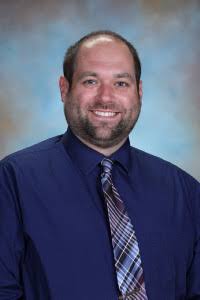
Column by Jonathan Nagy
Recently, we were proud at Bishop Carroll Catholic High School to host the Diocesan Family Conference. It was an incredibly blessed day filled with inspiring speakers, fellowship, prayer, and opportunities for spiritual renewal. Those who attended and presented left the day spiritually refreshed and inspired, ready to go forth and evangelize throughout the diocese.
During the conference, I had the opportunity to put on my IT support hat and assist several of the presenters with their technology needs. After helping one presenter connect to the Wi-Fi, I said to her, “I hope you have lots of people attend your session.” She replied, “Oh, I’m not worried about that. Remember, Jesus never said, ‘Count my sheep.’ He said, ‘Feed my sheep.’” That phrase has stuck with me ever since. I keep returning to it in prayer and meditation.
Jesus said, “Feed my sheep” to Peter in John’s Gospel after asking him three times, “Do you love me?” There is certainly profound symbolism in Peter affirming his love for Jesus three times after having denied Him three times. But rather than focusing on Peter, I want to focus on the sheep.
If we are to love Jesus, then we are called to love and care for His people. We are called to leave the ninety-nine in search of the one who is lost. We are called to do so with humility and for the right reason—not for recognition, praise, or personal glory, but for the glory of God and the building of His Kingdom.
One of my favorite things to do is sit down and watch a good movie. Over the years, I have developed several favorite “comfort” movies that I return to again and again. I’m sure I’m not the only one who does this! We find the genres and actors we enjoy, and we watch them over and over. Within our favorite movies, we discover favorite scenes, memorable moments, and lines that stay with us long after the movie ends.
One of my favorite movies, based on one of my favorite books, is J.R.R. Tolkien’s The Lord of the Rings: The Return of the King. Tolkien made no secret of the Catholic influences woven throughout his work, and there are countless memorable scenes and lines throughout the films.
Recently, while rewatching the series, I noticed a scene that I had often overlooked in favor of the movie’s more dramatic and grandiose moments. Aragorn is speaking with Éowyn of Rohan. Éowyn has been asked by her uncle, King Théoden, to remain behind and care for the people while he leads the warriors into battle against the forces of Mordor.
She is deeply unhappy with this assignment because she believes she is ready for battle and could do more good on the front lines than by remaining behind to protect and care for others. Although she eventually defies her king’s orders and rides into battle, for the moment she remains where she has been asked to stay. She expresses her frustration to Aragorn, who responds:
“Deeds will not be less valiant because they are unpraised.”
What a striking phrase!
We are often looking for the “big thing.” We want to make an enormous impact on society. We want our work to be noticed and our contributions to matter. There is certainly nothing inherently wrong with wanting to make a difference. But sometimes, in our desire to do something great, we overlook the little things—the simple, ordinary opportunities we have each day to feed and tend the sheep.
Most of us are familiar with St. Thérèse of the Child Jesus and her famous “Little Way.” The Little Way centers on doing ordinary things with extraordinary love. She wrote extensively about this spirituality, and several of her most memorable thoughts capture its essence:
“Miss no single opportunity of making some small sacrifice, here by a smiling look, there by a kindly word; always doing the smallest right and doing it all for love.”
“A word, a kindly smile, will often suffice to gladden a wounded and sorrowful heart.”
“Without love, deeds, even the most brilliant, count as nothing.”
“Holiness consists simply in doing God’s will and being just what God wants us to be.”
These remarkable thoughts from such a young and humble soul illustrate beautifully what Jesus was asking of Peter when He said, “Feed my sheep.”
Thérèse cared for the other sisters in her monastery. She prayed for priests and for her family. She performed mundane and sometimes difficult tasks with such love that I truly believe she found joy even in the smallest responsibilities. She did not need recognition. She did not need applause. She did it all out of love for Jesus and for His sheep. She never sought praise for the things she did. In that way, she perfectly embodies Aragorn’s words: “Deeds will not be less valiant because they are unpraised.”
Why do we serve? Perhaps we need to take a good, hard look at ourselves and ask whether we are truly living this way. Do we do things for others because we seek recognition, or is the opportunity to serve with love and humility enough? Do we selectively choose whom we will help and which tasks we are willing to perform? Do we insist that service fit conveniently into our schedules, or are we willing to sacrifice when someone else has a need? Do we sometimes focus our charity on the wrong things—or even on ourselves?
The hymn “Lord, Whose Love in Humble Service” contains beautiful words that exemplify Christian charity:
Lord, whose love in humble service bore the weight of human need,
Who upon the Cross forsaken, offered mercy’s perfect deed;
We, your servants, bring the worship not of voice alone, but heart:
Consecrating to your purpose every gift which you impart.
Called from worship into service forth in your great name we go,
To the child, the youth, the aged, love in living deeds to show;
Hope and health, goodwill and comfort, counsel, aid and peace we give
That your children, Lord, in freedom, may your mercy know, and live.
Several phrases in that hymn stand out to me.
First: “Consecrating to your purpose every gift which you impart.”
Every gift and talent we possess ultimately comes from God. Our abilities, our time, our resources, our opportunities, and even the seemingly insignificant things we are capable of doing are gifts. We are called to use those gifts according to His purpose. When we tend His sheep, we are fulfilling the purpose for which God has given us those gifts.
Second: “To the child, the youth, the aged.”
God’s sheep have no age limit. We are called to care for others from the womb to the tomb—and every moment in between. God loves every person, and we are called to share that love with others.
Good deeds done in Jesus’ name can create a kind of spiritual snowball effect. The hope is that when others see generosity with our time, talent, and treasure, they will be inspired to do the same for someone else. No deed done for another person is too small, especially when it is done with great love.
St. Paul expressed this beautifully in his Letter to the Philippians:
“Do nothing from selfishness or empty conceit, but with humility consider one another as more important than yourselves; do not merely look out for your own personal interests, but also for the interests of others. Have this attitude in yourselves which was also in Christ Jesus…” Paul then reminds us that Christ, though He existed in the form of God, humbled Himself, took the form of a servant, and became obedient even to death on a cross. Jesus, God Made Man, made the ultimate act of humble service.
He did not have to leave the glory of His Father to become a servant to others. He did not have to humble Himself, suffer, and die. Yet He chose to do so out of love.
He came to feed His sheep. And when He ascended into Heaven, He entrusted that mission to Peter and the other disciples. That same mission has now been entrusted to each of us. Every time we do something good in His name, we continue the mission of Christ.
We also have a responsibility to pass this spirit of humble generosity to the generations that will come after us. We will not be here forever. Part of our task is to ensure that those who follow us will not only carry on the good work we have begun but will be inspired to take it even further.
Look for opportunities to humbly help others. Do not seek praise. Do not serve with the expectation of recognition. Do not worry whether anyone notices.
The knowledge that God sees what we have done is enough. In fact, sometimes keeping our good deeds between ourselves and God is itself an act of humility.
Jesus said to His disciples in John 13:14–15:
“So if I, the Lord and the Teacher, washed your feet, you also ought to wash one another’s feet. For I gave you an example, so that you also would do just as I did for you.”
Jesus did not simply tell His disciples to serve. He showed them how.
He knelt down.
He washed their feet.
He served.
And then He told them to do the same.
So, do the good deed.
Do the right thing.
Serve humbly.
Give generously.
Love sacrificially.
Do it for the person who needs it, not for the applause that might follow. Do it because you love Jesus.
Feed the sheep.
Tend the flock.
And remember: your deeds will not be less valiant because they go unpraised.
God sees. God knows. And that alone is sufficient.
Jonathan Nagy, M.Ed., is the principal of Bishop Carroll Catholic High School in Ebensburg and the music director at the Basilica of Saint Michael the Archangel in Loretto.
Excellent content provided by https://www.dioceseaj.org/.